Published September 28, 2026
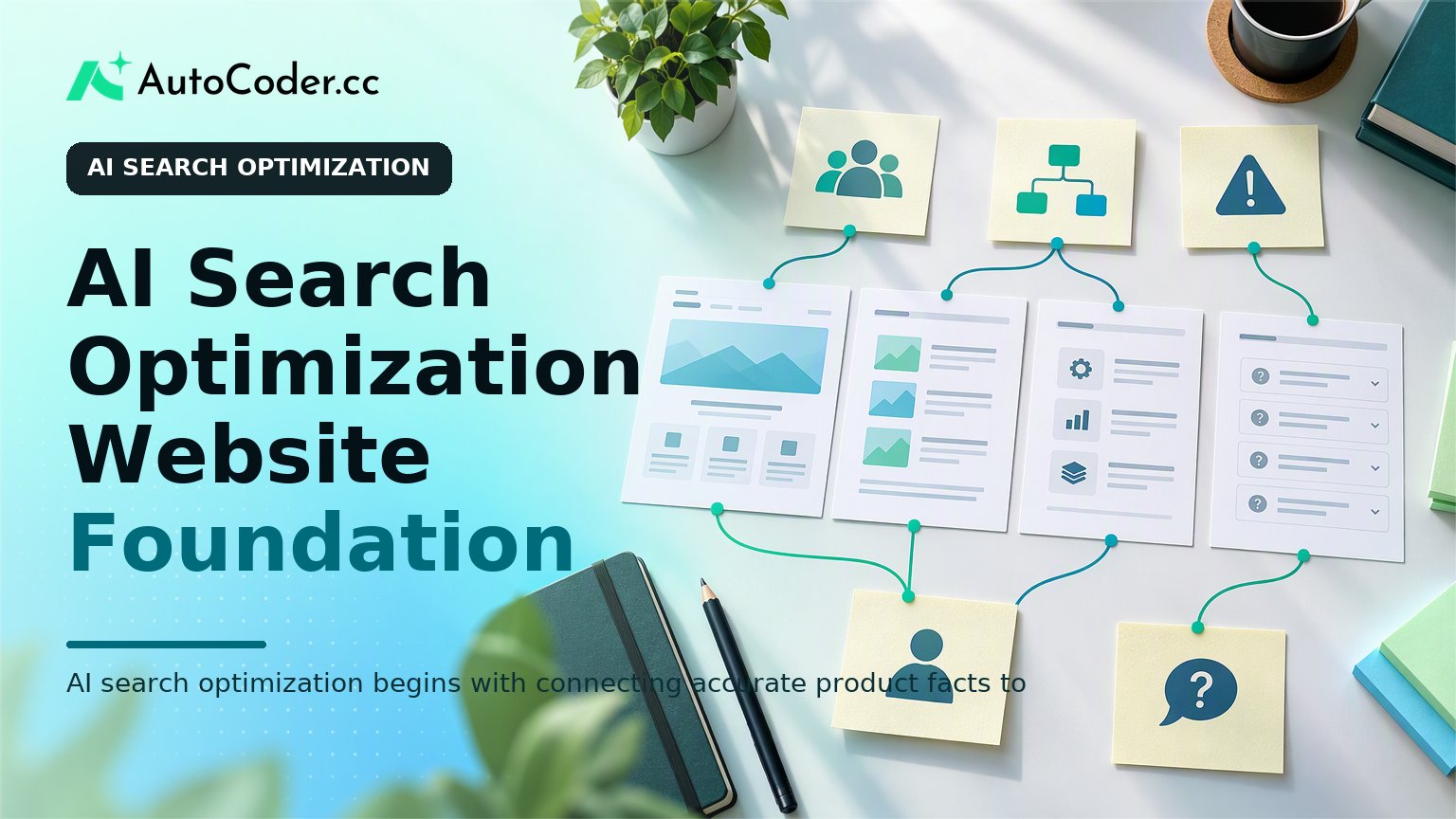
Editorial illustration showing a product website plan connecting product facts, user questions, and clearly labeled web pages

AI search optimization begins with connecting accurate product facts to the pages and questions visitors need.

For a new digital product, AI search optimization starts with a straightforward goal: make it easy for people and search systems to understand what the product does, who it is for, and where its claims apply. It is not a separate substitute for sound search engine optimization. Instead, it extends the same discipline of useful content, clear information architecture, and accessible pages to search experiences that may summarize, compare, or answer questions in conversational language. For founders and product teams, the practical priority is not attempting to control every AI-generated answer. It is building a website that communicates the product accurately enough to be found, interpreted, and evaluated. That foundation also improves the experience for prospective users arriving through conventional search, referrals, direct visits, or shared links.

What AI search optimization means in practice

The practical point is to reduce ambiguity about your product and give each important question a page or section with a direct, accurate answer. AI search optimization, sometimes called AI SEO or generative engine optimization, describes efforts to help content and the entities described in it become easier to understand in AI-driven search experiences. A person might search for a familiar keyword such as “MVP website builder.” They may also ask a longer question: “How can a non-technical founder create a deployable prototype with source code?” In either case, the underlying need is context. A useful page should explain the relevant problem, the product’s role, the workflow, and meaningful boundaries without making the visitor infer those details. This does not mean writing only for machines or filling pages with keyword variations. It means publishing material that supports a defensible answer. A product homepage can introduce the core value. A use-case page can explain a particular audience and workflow. For example, a page about an AI application builder should not stop at a broad label. It can state whether users describe requirements in natural language, what kinds of components may be generated, how editing works, and what a team needs to review before deployment. AI search visibility is therefore best treated as an outcome influenced by many factors, not as a placement that a website owner can guarantee. Search providers may select, summarize, cite, or omit content differently depending on the query and product. A useful working definition is this: AI search optimization is the ongoing practice of making website content clear, structured, accessible, current, and grounded in the product’s real capabilities so it can serve users across both traditional and AI-assisted search journeys.

How AI search optimization relates to traditional SEO

The practical point is to keep core SEO work in place, then adapt content to the more conversational and contextual questions people ask. SEO for AI search shares many foundations with conventional SEO: pages need to be discoverable, readable, logically organized, and valuable to the intended reader. Crawlable pages remain important. If a key explanation exists only in an image, a gated flow, a video without supporting text, or an interface that is difficult to access, it is less useful as a public reference. The difference is often in the query shape and the expected response. Traditional search may lead with short topic phrases. AI-assisted search can encourage questions with constraints: a user may ask which approach suits a small team, what prerequisites apply, or how two options differ. That does not require turning every page into a long essay. It requires matching the page to a real intent. A feature page should explain the feature. A comparison page should identify criteria and trade-offs. Several misconceptions can distract teams from this work:
  • AI SEO is not a shortcut around useful content. Rewording thin pages with AI-generated phrasing does not add product knowledge or evidence. - Structured data is not a claim mechanism. It can help describe content when used accurately, but it cannot make an unsupported page trustworthy or ensure inclusion in an answer.
The practical overlap is substantial. Good website content optimization makes pages easier to scan, easier to maintain, and more likely to address the questions that arise before a prospect takes action. Generative engine optimization is most useful when it strengthens those basics rather than creating a disconnected content program.

Create pages that clearly explain your product
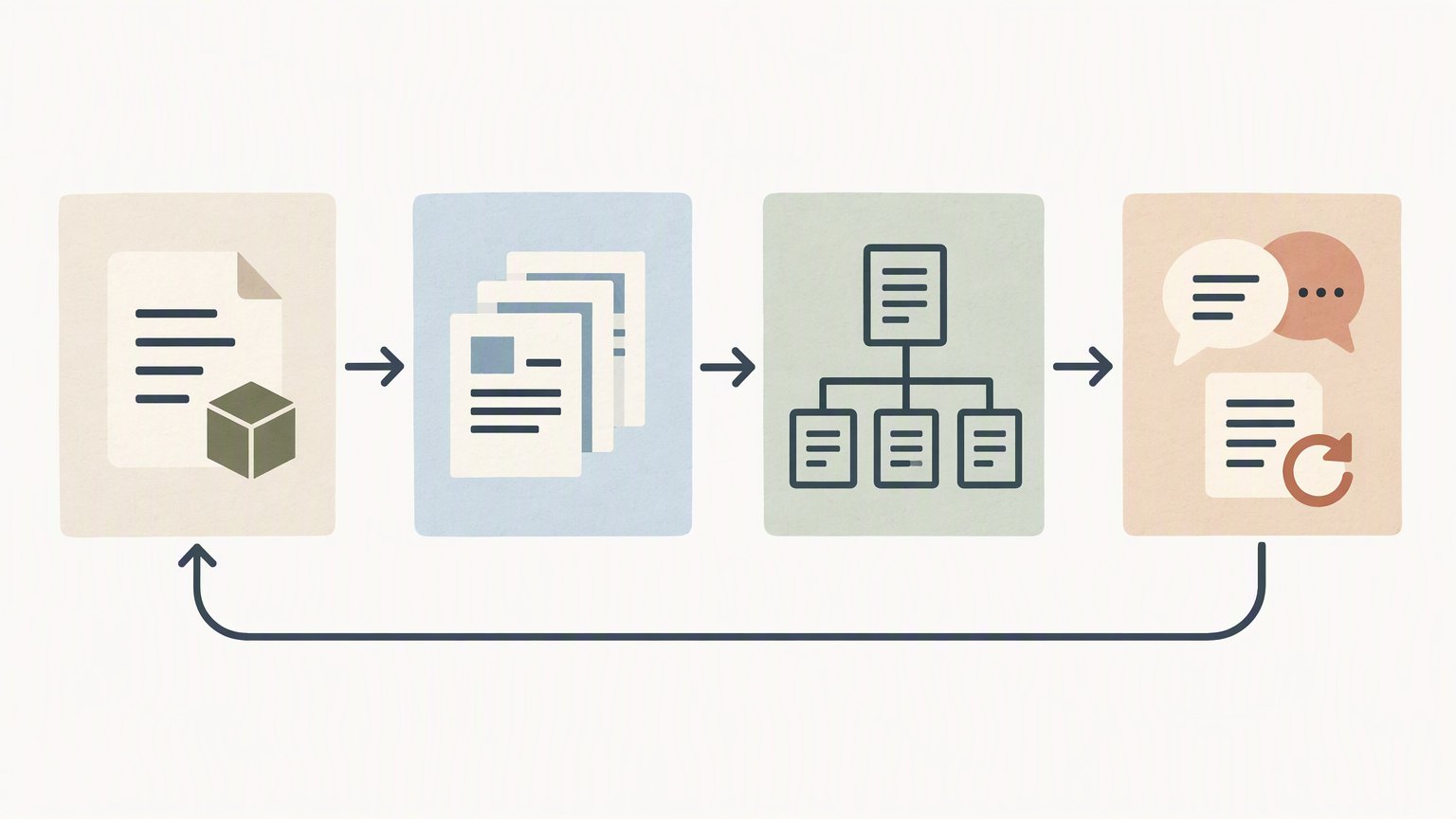
Workflow diagram showing how a clear product explanation becomes focused website pages and connected user answers

A consistent product narrative should flow into focused pages, accessible structure, and ongoing content improvements.

The practical point is to make the product explanation complete before expanding the number of pages. A new website should answer the basic questions a qualified visitor has within a short path: What is this? Who is it for? Begin with a concise product narrative that your team can use consistently. Define the intended audience in practical terms, not only by company size or job title. Name the problem in the language customers use. A company building with AutoCoder’s AI app builder, for instance, could accurately explain that natural-language requirements can be used to generate editable full-stack applications, including frontend, backend, and database components. It could then clarify relevant workflow details such as authentication, deployment, continued editing, and source-code export where those capabilities apply. That is more informative than repeating a broad promise about building quickly. From there, build a small set of focused pages around major user needs:
  1. A homepage that introduces the product, primary audience, and central outcome in plain language. 2. Use-case pages that connect specific roles or situations to a concrete workflow and expected result. 3. Feature or capability pages that explain what each important function does, how it fits the overall product, and any limits that matter.
The page count is less important than coverage and consistency. If the homepage calls something a “prototype,” the documentation calls it a “production app,” and a feature page uses a third term, readers may struggle to understand the distinction. Direct answers also matter. Place a short answer near the heading, then provide supporting explanation. For a question such as “Can I continue editing after generation?” answer the question first and then explain the relevant workflow. Avoid publishing pages merely because a keyword tool suggests a phrase. A thin page that restates the same information under a new headline creates maintenance work and can confuse the site’s topical structure. Consolidate overlapping material where possible, and add a new page when it serves a distinct user question.

Strengthen structure, trust, and technical foundations

The practical point is to ensure important information is reachable, attributable, and represented accurately in the site’s code and content. Clear writing cannot compensate for pages that are inaccessible or disconnected from the rest of the website. Start with navigation and internal links. Main navigation should point to the pages users most often need to evaluate the product. Within each page, link to the next relevant question rather than leaving readers at a dead end. Headings should reflect the page topic and form a logical hierarchy. A visitor scanning headings ought to understand the page’s argument without reading every sentence. Page titles and meta descriptions should similarly describe the content rather than relying on repeated slogans. Trust signals should be factual and maintainable. Depending on the site and audience, this can include an accurate company description, contact information, author or editorial ownership, clear policy pages, and visible update information for material that changes. Technical work should focus on access and accuracy:
  • Keep essential page content available in readable HTML rather than relying solely on visual or interactive elements. - Use meaningful image alt text when an image conveys information that text does not already provide. - Check that important pages load reliably and work across common device contexts.
Do not treat schema markup as a decorative technical task. Inaccurate markup can create inconsistency between what the page says and what its code claims. Start with the actual content model: organization details, products, articles, FAQs, or other applicable entities should be represented only when the information is present and maintained. This foundation supports more than AI search visibility. It helps users compare options, support teams answer questions consistently, and marketers identify which explanations need refinement. The goal is a website that makes reliable information easier to find, not a collection of isolated optimization tactics.

Use an MVP website to test and improve content

Editorial illustration of a website content review checklist beside connected page cards

An MVP website improves through recurring checks for clarity, consistency, connected pages, and accurate claims.

The practical point is to treat the website as a learning system that reveals where the product explanation is incomplete. Early-stage teams do not need a large content library before launch. They need a functional site that supports the core journey and can be revised as user questions become clearer. First, identify the moments when a visitor needs information to proceed. This may include understanding the product category, checking a specific capability, assessing implementation requirements, or deciding how to request access. Build pages for those moments before adding broader educational material. Second, collect signals from real interactions. Search queries, site-search terms, sales conversations, support requests, product onboarding questions, and on-page behavior can expose recurring confusion. A repeated question is often a content gap, a terminology problem, or a navigation problem. Third, maintain an editorial review routine. When the product changes, review the homepage, use-case pages, feature explanations, FAQs, and documentation together. Update terminology consistently. Remove claims that are no longer accurate. Add context where a new capability changes the expected workflow. Teams can use a website-building workflow to move from idea to a usable starting point, but the generated result still requires editorial and technical review. AutoCoder can generate websites and full-stack applications from natural-language requirements, with editable code and deployment-oriented workflows. For an MVP site, that can help a team establish pages and flows quickly; it does not remove the need to verify copy, accessibility, product claims, and the user journey. A practical review checklist is simple: Can a first-time visitor describe the product after reading the homepage? Can they find the answer to the next likely question? Are important claims qualified where needed? Are related pages connected?

FAQ

What is AI search optimization?

AI search optimization is the practice of making website information clearer, more accessible, and better structured for people using AI-assisted or conversational search experiences. It relies on accurate product explanations, useful pages, sound technical foundations, and regular updates rather than a guaranteed method for appearing in generated answers.

Is AI search optimization different from SEO?

It overlaps heavily with SEO. Both depend on discoverable pages, relevant content, logical structure, and a good user experience. AI search optimization places added attention on conversational questions, direct answers, context, and consistency across pages, but it does not replace core SEO work.

How can a new website become easier for AI search systems to understand?

Start by explaining the product, audience, workflow, and limitations in plain language. Create focused pages for important use cases and capabilities, use descriptive headings and internal links, keep key content accessible, and ensure company and policy information is accurate where relevant.

Does AI search optimization require a complete website redesign?

Usually not. Many teams can begin by improving existing high-priority pages, resolving inconsistent terminology, adding missing answers, and fixing technical access issues. A larger redesign may be useful if navigation or page structure prevents users from finding essential information.

Conclusion

AI search optimization is most effective when it is treated as disciplined website communication rather than a separate visibility trick. A clear product narrative, focused pages, accurate technical signals, and a regular update process help people and AI-driven search experiences understand what a new product offers. Start with the questions that affect a visitor’s decision, publish direct and supportable answers, and improve the site as customer language and product reality develop. That approach strengthens AI search optimization while preserving the core purpose of the website: helping the right reader make an informed next step.